
 EN
EN
 AR
AR FR
FR DE
DE IT
IT JA
JA PT
PT RU
RU ES
ES NL
NL RO
RO PL
PL VI
VI GA
GA MS
MS SK
SK SV
SV IW
IW KO
KO TL
TL
Temp Fence Panels for Hire Fleets: An Australia Buying Guide
Temporary Fence Panels for Australian Hire Fleets: A Buying Guide for Reuse, Not Replacement
A hire company does not buy a temporary fence. It buys a number of cycles. The panel that looks identical in a photograph to the one beside it may deliver six of those cycles or two, and the difference is decided by specifications that most quotes never mention.
That is why the economics of temporary fencing work differently from almost any other construction product. A contractor's cost per project falls as the panel's purchase price falls. A hire company's cost per project falls as the number of cycles the panel survives rises. Those two numbers move in opposite directions, and buying on unit price alone is how a fleet ends up replacing stock it should still be renting out.
This guide sets out what Australian hire companies, rental groups and distributors should be checking before they place an order — and what to ask a supplier who has not volunteered it.
What Separates a Fleet Panel from a Project Panel?
Nothing in the panel's appearance. Everything in three specifications behind it.
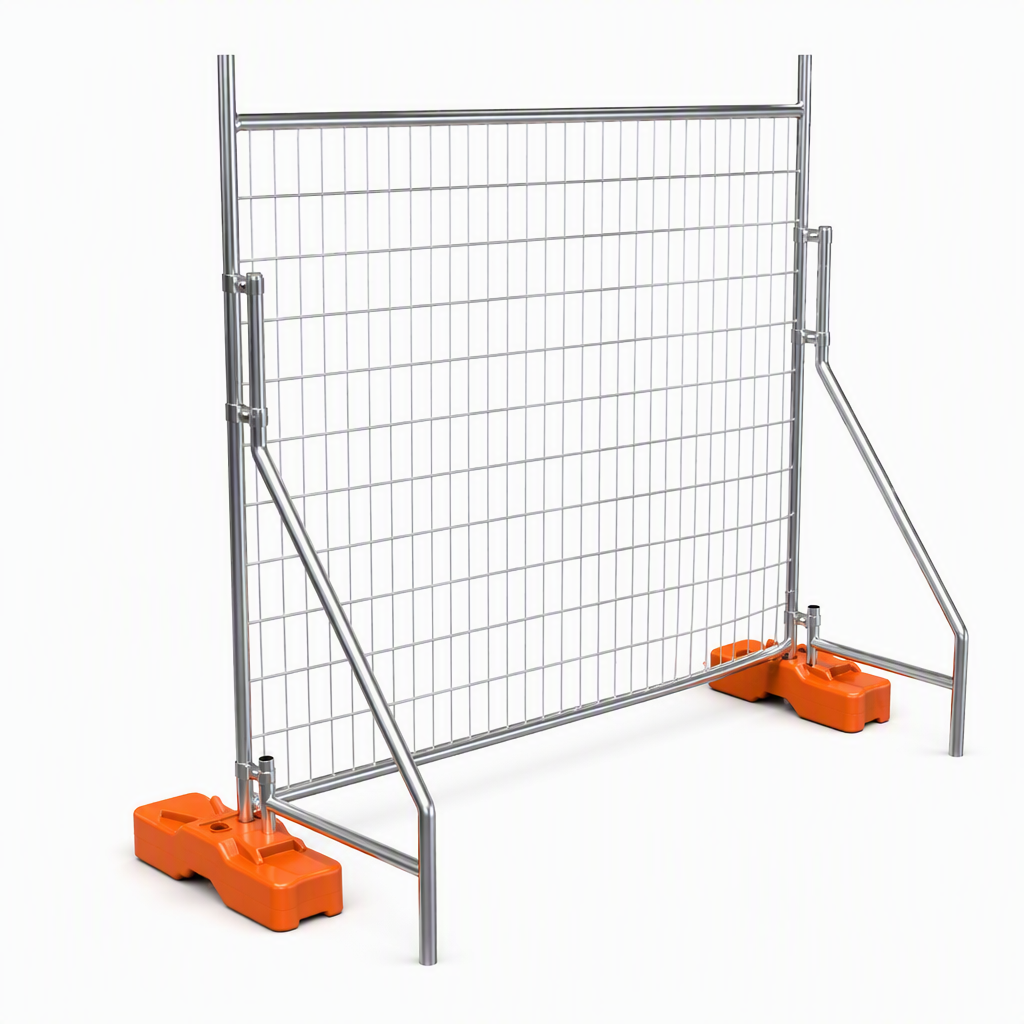
Tube wall thickness decides how many cycles you get. This is the single specification most often left off an Australian temp fence quote, and the one that decides fleet economics. Australian panels are commonly built with a round-tube frame — OD 32 mm, 38 mm or 42 mm — and a wall thickness between 1.5 mm and 2.0 mm. Every erection, strike, stack, transport and re-erection loads that frame. Thin tube survives the first few cycles perfectly well and then starts deforming at the joints, and once a panel's frame is out of square it will not clamp cleanly to the panel beside it. That is the moment the panel leaves the rentable fleet. Ask for wall thickness in writing, in millimetres, before you compare two prices as if they were the same product.
The coating decides which of those cycles you get back cheaply. Australian ultraviolet levels and coastal salt spray are unforgiving, and the panels that fail early are usually the ones that rust from the inside. Full hot-dip galvanising after fabrication is the answer, because the frame tube and the mesh are dipped as a welded assembly: the coating reaches the welds, the cut ends, and the internal surface of the tube, not just the face you can see from the fence line. Guoxing panels carry a zinc coating of at least 42 µm, or approximately 300 g/m² — a number worth writing into your purchase specification so that a later reorder matches the fleet you already own.
Packaging and handling decide your cost per panel delivered. For an importer, the fleet economics start in the container, not on the site. Panels need to stack and strap so they arrive as loaded, feet need to be palletised or bundled to a configuration the yard can handle with the equipment it actually owns, and corners need protection where panels bear on each other in transit. A cheap panel with 8 per cent transit damage is not a cheap panel.
Real-World Scenarios: Where Fleet Economics Actually Show Up
Scenario One: Replacing the Bottom Third of a Fleet
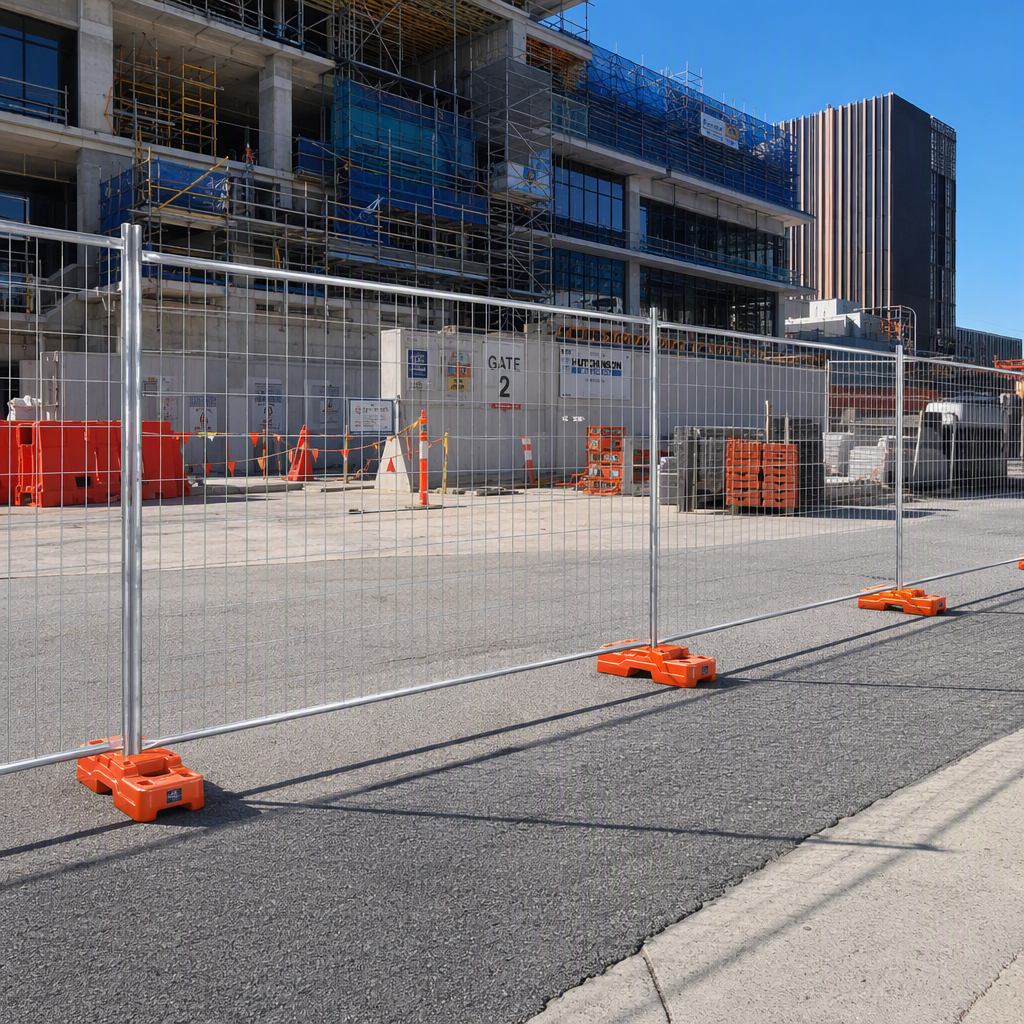
Every mature hire fleet develops a bottom third — the panels that have been out most often, been struck in a hurry, and are starting to show it. The instinct is to replace them with the cheapest available panel, because they are the ones that take the most abuse. That is exactly backwards. The panels that leave the yard most often are the ones where wall thickness and coating earn back their cost fastest, and buying the thinnest tube to fill the high-turnover slots shortens the life of the whole fleet, because the new stock is the stock that wears first.
Scenario Two: The Coastal Depot Losing Panels to Rust
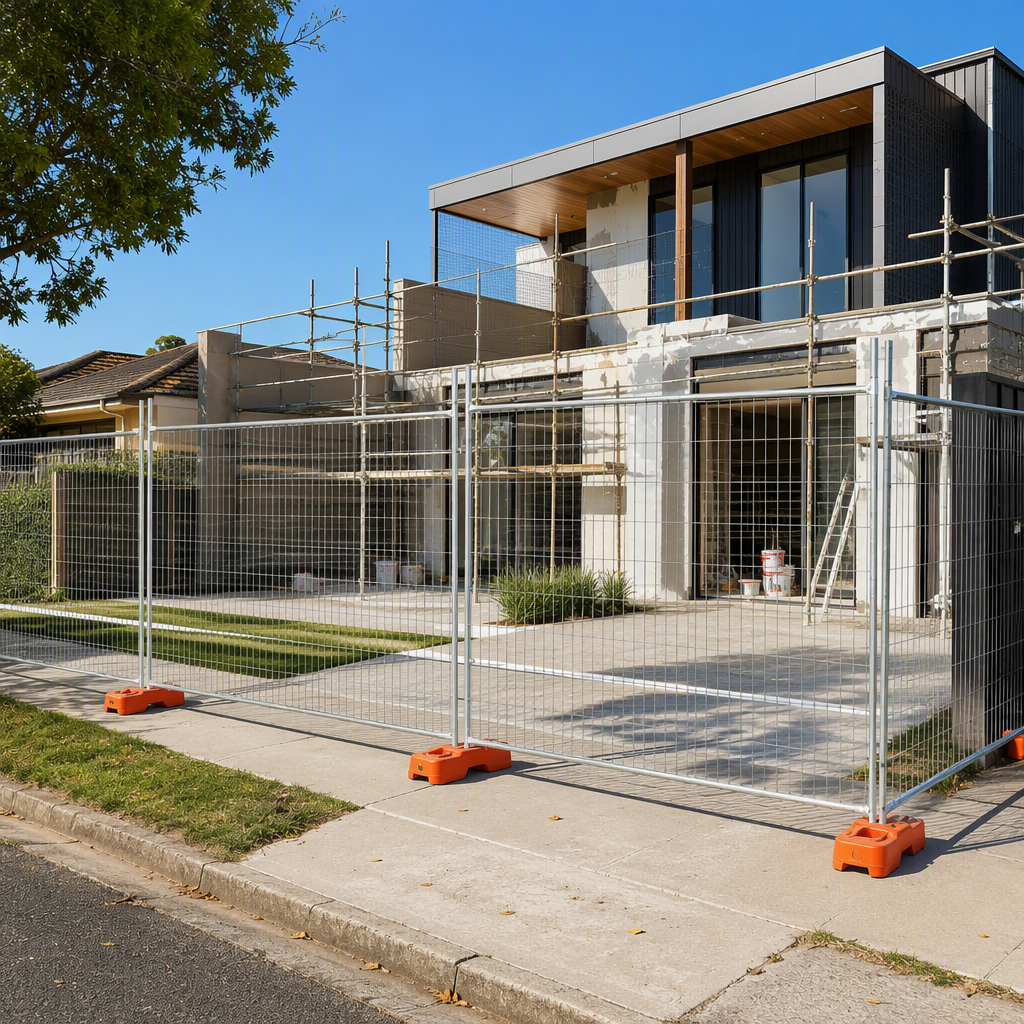
A depot in a salt-spray environment will retire panels long before an inland depot does, and the failure mode is almost always internal. Rust starts inside a tube or at a weld, works outward, and shows up as a stain or a blister after the damage is structural. When you specify for a coastal yard, the finish is not a line item to be trimmed — it is the specification that decides your replacement rate. This is also why a coating figure in grams per square metre belongs in your purchase order rather than in a brochure.
Scenario Three: Buying by the Container
For an importer, the meaningful unit is not the panel — it is the container. Panels, feet, clamps and bracing occupy space in different proportions, and the mix that fills a cube most efficiently is rarely the mix that fills a yard most efficiently. Ask for a loading plan before you commit: it tells you how many linear metres of fence you are actually buying, and it makes two suppliers' quotes genuinely comparable for the first time. On a fleet-scale order, a loading plan is worth more than a discount.
Scenario Four: Branded Base Feet as an Anti-Loss Measure
Temporary fencing goes missing — left behind on a site, borrowed permanently by another contractor, or mixed into someone else's fleet on a shared laydown area. Branding the base feet with your logo or part number is one of the few inventory controls that works without adding a process to the site crew. Because the base is moulded rather than welded, the branding goes in at the tooling stage: decide it when you place the order, not after the stock has arrived.
Questions We Hear Most Often
Q: What tube wall thickness should a hire fleet specify?
Between 1.5 mm and 2.0 mm for a fleet that is rented out repeatedly. Below that, the frame starts to deform at the joints under repeated erection and stacking, and once a panel is out of square it stops clamping properly to its neighbours. If a supplier quotes a panel without stating wall thickness, treat the quote as incomplete rather than as the cheapest option.
Q: How do I compare temporary fence quotes fairly?
Compare specification first, price second, and only ever like for like. Put these on one line for every supplier: tube OD and wall thickness, mesh opening, wire diameter, coating (and grams per square metre of zinc), base dimensions and base mass, clamp thickness and centre distance, and whether bracing stays are included. Then ask for a loading plan. Two quotes that look 15 per cent apart in unit price are frequently within a few per cent of each other once the packing and the specification are matched.
Q: What breaks first on an Australian temporary fence panel?
Frame deformation at the joints, followed by corrosion starting at welds and cut ends. The mesh itself is rarely the failure point — 60 x 150 mm mesh welded from 3.0 mm to 4.0 mm wire is robust in normal hire use. Watch the feet as well: a concrete-filled foot that has taken a hard knock in transit can crack, and a cracked foot loses mass, which is the one thing it was there to provide.
Q: How do I reduce damage in transport and stacking?
Specify the packing, not just the product. Panels should be stacked and strapped so they cannot shift, with protection at the bearing points, and feet should be bundled or palletised to suit your yard equipment. On arrival, inspect before the container is emptied — transit damage is far easier to resolve with photographs taken at the point of unloading.
Q: Can I brand the base feet with my own logo?
Yes. Custom branding is moulded into the base foot, so it is confirmed at the tooling stage with your order. It is the most practical anti-loss measure available to a hire business, and it doubles as a site-level advertisement every time a panel is deployed.
Q: What documentation should come with a container?
At minimum, a written specification matching the order, a packing list matching the loaded container, and the quality documentation that applies to the coating and the manufacturing. Anping Guoxing manufactures under ISO 9001 quality control with CE and SGS certification available on request, and we supply the documentation your QA file needs so it can be closed the same week the container lands.
Why Buyers Choose Guoxing Temporary Fence Panels
Anping Guoxing Wire Mesh Products manufactures temporary fencing in the heart of the world's wire mesh industry — Anping, China. Every panel is produced under ISO 9001 quality control, with CE and SGS certification available on request, and our export experience covers more than 30 countries across the Middle East, Europe, the Americas and Oceania.
For hire companies and distributors, we quote fleet orders the way a fleet is actually bought: panel specification, accessories, base branding, packing configuration and loading plan, priced together so you can see your cost per linear metre rather than your cost per unit.
Need a tailored quotation for your fleet order? Contact the Guoxing team today — we respond to all inquiries within 24 hours.