
 EN
EN
 AR
AR FR
FR DE
DE IT
IT JA
JA PT
PT RU
RU ES
ES NL
NL RO
RO PL
PL VI
VI GA
GA MS
MS SK
SK SV
SV IW
IW KO
KO TL
TL
3D Fence vs Chain Link vs Double Wire: Choosing the Right Security Fence
Walk through any industrial district and you will see all three of them standing side by side: flat chain link rolling across a storage yard, rigid 3D panels enclosing a housing development, and massive double wire panels surrounding a logistics hub. To the untrained eye they all look like "mesh fences." To a project manager responsible for budget, security, and long-term maintenance, the differences are enormous.
This article compares the three most common welded and woven fence systems — 3D wire mesh fence, chain link fence, and double wire mesh fence — across the criteria that actually matter: security level, durability, appearance, cost, and maintenance. By the end, you will know exactly which system fits your project.

How the Three Systems Are Built
Chain link fence is woven, not welded. Wire is bent into a diamond pattern and mechanically twisted at each intersection. It is rolled into coils, stretched between posts, and tied to the top rail and line posts. Because it is woven, chain link is flexible — it bends rather than breaks under impact.
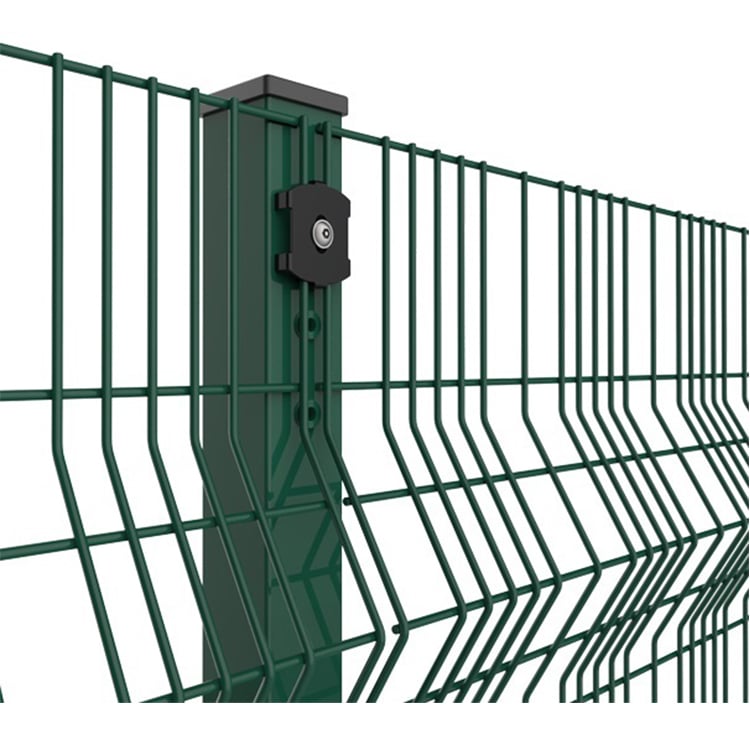
3D wire mesh fence is a welded panel system. Horizontal and vertical wires are resistance-welded at every intersection to form a rigid panel, then a deep V-shaped bend is pressed vertically through the panel. The panels bolt onto steel posts. The V-profile is what gives the fence its third dimension — and its name.
Double wire mesh fence is also a welded panel system, but with two parallel mesh layers welded to a single frame, typically with vertical stiffening wires between the layers. The result is an extremely rigid, thick, and heavy panel that is the strongest of the three.
Security Level: The Decisive Factor
The three systems differ dramatically in how they resist intrusion. Let us compare them across the four criteria that security buyers actually evaluate.
Climb resistance. Chain link performs poorly: its diamond mesh pattern is easy to grip with fingers and boot tips, making it the most climbable of the three. The 3D fence is significantly better — the angled V-profile creates awkward handholds that make scaling difficult. Double wire is the best of the group: its double mesh layer and small apertures leave almost nothing to grip, which is why correctional and high-security facilities specify it.
Cut resistance. Chain link is the weakest, using relatively thin wire that a standard bolt cutter can open quickly. The 3D fence is a clear step up, using thicker wire that requires heavier cutting tools and more effort per cut. Double wire is the strongest — an intruder must cut through two welded layers of thick wire, which takes substantially more time and louder tools, both of which work against an intruder.
Impact strength. Chain link is the most vulnerable: it flexes under vehicle impact or falling debris, but it deforms permanently and often tears. The 3D fence handles impact far better because the V-profile acts as a structural rib that stiffens the whole panel. Double wire is the most rigid and heaviest of the three, absorbing impacts that would buckle the other systems.
Deterrence appearance. Chain link offers minimal deterrence — it simply reads as a cheap, easily defeated boundary, which is why trespassers rarely hesitate around it. The 3D fence presents a solid, professional barrier whose visible depth and clean panel lines tell a would-be intruder the fence will be difficult to climb. Double wire is the most imposing of all: its heavy, thick profile signals high-security infrastructure unmistakably, and deterrence by appearance alone is often enough to push intruders elsewhere.
The verdict: If your site faces a real intrusion threat — a warehouse with valuable inventory, a power station, a correctional facility — chain link alone is rarely adequate. It can be upgraded with barbed wire and razor wire, but the base panel remains easy to climb. For standard perimeter security, the 3D fence provides a strong balance: genuinely difficult to climb, noticeably harder to cut, and far more rigid than chain link. Where maximum physical strength is non-negotiable, double wire is the answer — at roughly 1.5 to 2 times the cost of 3D.
Durability and Maintenance
All three systems are available in hot-dip galvanized or galvanized-plus-powder-coated finishes, so surface treatment matters more than the weave or weld pattern itself. The real differences are structural:
Chain link is the most vulnerable to localized damage. A vehicle impact or falling tree deforms a section, and repairs mean unclipping and re-stretching the fabric — a job that usually requires a professional and can leave the fence permanently slack if done poorly. Over time, chain link also sags between posts unless properly tensioned.
3D fence panels are individually replaceable. Damage one panel and you unbolt it, bolt in a new one, and the fence is fully restored in under an hour with basic tools. This modularity is one of the strongest long-term arguments for choosing 3D over chain link: maintenance is simple and localized.
Double wire is similarly modular but heavier to handle. Panel replacement requires two workers and careful lifting. Its real advantage is lifespan: with proper galvanization, double wire systems routinely last 25 to 30 years in industrial environments.
Appearance and Architectural Fit
For residential communities, commercial campuses, and public spaces, appearance is a real purchasing criterion — not vanity. A fence line is a permanent part of the built environment.
Chain link is universally understood as utilitarian. It reads as "temporary" or "budget" even when brand new, and its woven texture is difficult to customize beyond color.
3D fence is the aesthetic middle ground that most developers prefer. The V-profile adds visual depth that photographs well, and powder coating is available in virtually any RAL color — green for blending into landscapes, black for a premium architectural look, or safety colors for industrial zones. Its clean, uniform panel lines look intentional and modern.
Double wire looks the most imposing — which is exactly the point. It signals "high-security facility" unmistakably, which is desirable for logistics and infrastructure sites but can feel harsh for residential use.
Cost Comparison: Lifetime Cost, Not Just Purchase Price
On purchase price alone, chain link is the cheapest, 3D sits in the middle, and double wire is the most expensive. But project managers should calculate lifetime cost:
Chain link — lowest upfront cost, but shortest service life in corrosive environments (8 to 15 years with standard galvanization), and the highest maintenance labor because repairs require re-stretching.
3D fence — moderate upfront cost, 20 to 30-year service life with proper coating, and the cheapest maintenance of the three because damaged panels swap out in minutes.
Double wire — highest upfront cost, longest service life, but heavy panels mean higher shipping cost per meter and more labor for installation and repair.
For a typical 1,000-meter industrial perimeter, the 3D fence usually delivers the lowest total cost of ownership over 20 years once maintenance labor is factored in — even though it costs more upfront than chain link.
Which One Should You Choose?
Choose chain link if: budget is extremely tight, the fence is temporary, or the site has minimal security requirements and you accept frequent maintenance.
Choose 3D fence if: you need a professional, climb-resistant, low-maintenance perimeter at a reasonable cost — the right answer for most housing developments, industrial plants, schools, warehouses, and commercial sites.
Choose double wire if: you are securing critical infrastructure, high-value inventory, or sites with a demonstrated intrusion risk where maximum physical strength justifies the premium.
Questions Buyers Ask Us
Q: Can a 3D fence be topped with razor or barbed wire?
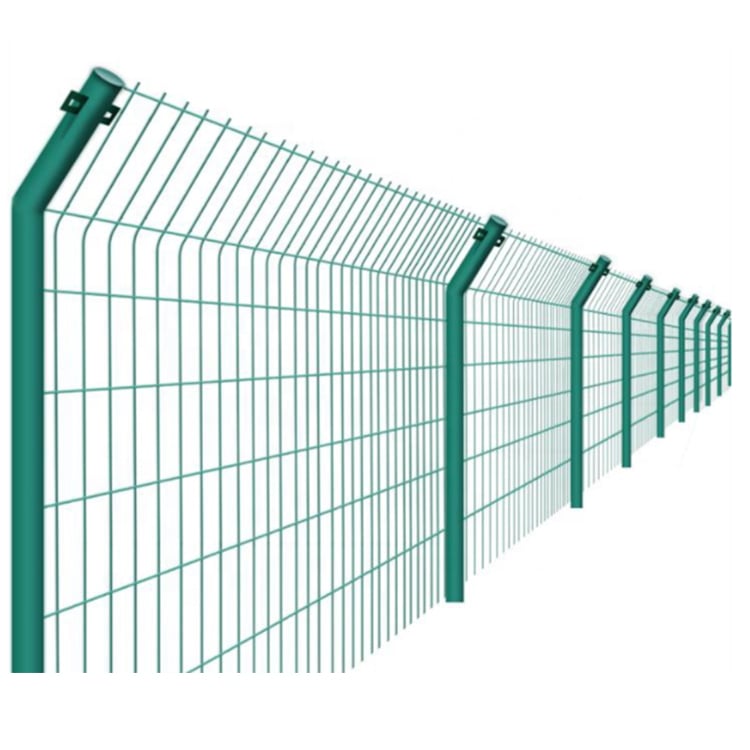
Yes. Most 3D fence systems accept angled top sections (bent-top or spearhead-top configurations) that carry barbed or razor wire. This is a common upgrade for industrial and infrastructure sites.
Q: How high can a 3D fence go?
Standard panels range from 1.0 m to 2.4 m. Above 2.0 m, we recommend combining height with an angled top section, because height alone is not a substitute for a proper anti-climb top design.
Q: Do I need concrete foundations?
For permanent installations, yes. Posts should be set in concrete to a depth of roughly one-third of the post height. Freestanding options exist for temporary or movable applications.
Q: Can panels be customized in size and color?
Yes. Wire diameter, mesh opening, panel dimensions, and powder-coat color are all customizable. Custom orders typically add two to four weeks to lead time.
The Bottom Line
The 3D fence is the most balanced perimeter solution available today: real anti-climb performance, 20 to 30-year durability, professional appearance, and modular low-cost maintenance — at a price point between utilitarian chain link and heavy-duty double wire. For the majority of commercial, industrial, and residential projects, it is simply the right answer.
Anping Guoxing manufactures 3D wire mesh fence panels factory-direct under ISO9001 quality control, with CE and SGS certification available and export experience across more than 30 countries. Whether you need 100 meters or 50,000 meters, our engineers will help you specify the optimal wire gauge, mesh opening, height, and finish for your project.