
 EN
EN
 AR
AR FR
FR DE
DE IT
IT JA
JA PT
PT RU
RU ES
ES NL
NL RO
RO PL
PL VI
VI GA
GA MS
MS SK
SK SV
SV IW
IW KO
KO TL
TL
Buying Edge Protection Fence: The Questions You Should Ask Your Supplier
Ordering an edge protection fence is not like ordering standard construction consumables. It is a safety-critical engineered system, and the difference between a properly specified system and a generic one is measured in lives, liability, and regulatory compliance. Yet many buyers approach the purchase the same way they order rebar — focused almost entirely on price per meter.
This article is written for the contractor, project manager, or procurement officer who wants to ask the right questions before signing a purchase order. Each section is built around a question we have been asked — or wish more clients would ask — during the quotation process.
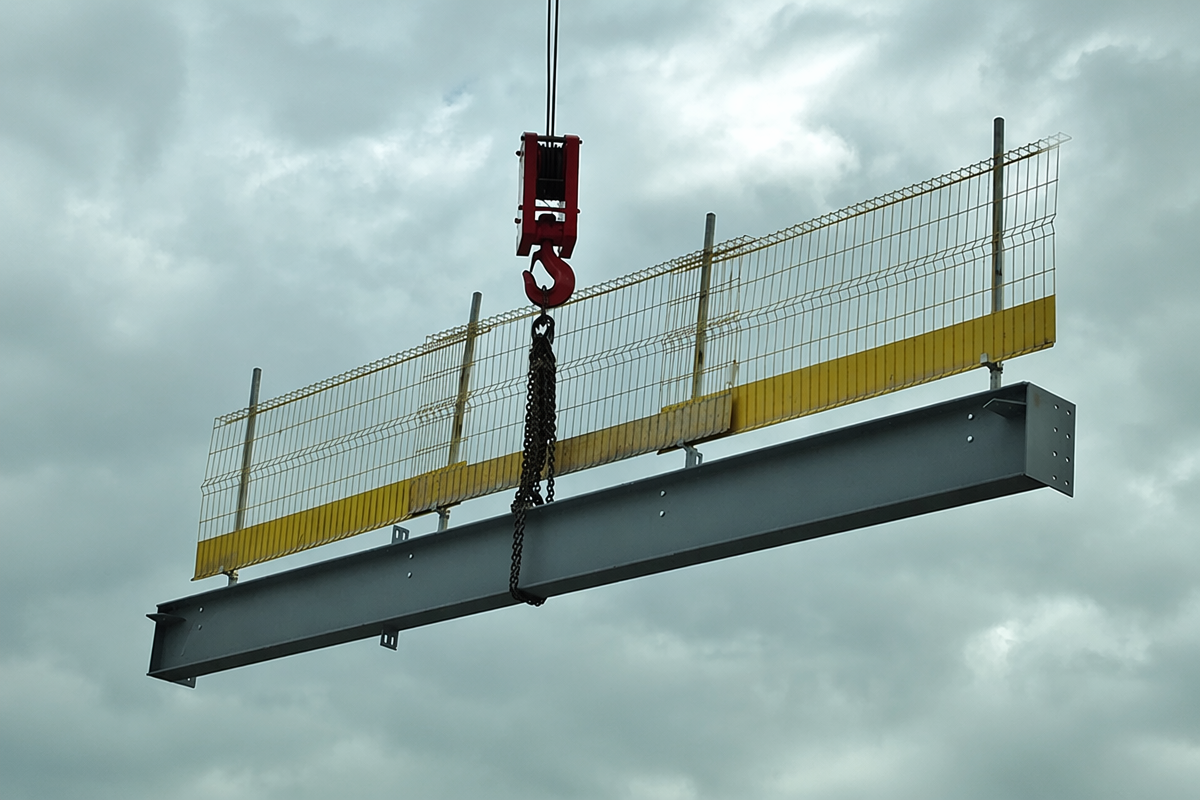
Question 1: "Can you provide load-test certificates for my specific configuration?"
This is the most important question in edge protection procurement, and the one most often skipped. A manufacturer may have a test certificate showing their guardrail post withstands a 200-pound concentrated load — but was that test conducted at the same post spacing you plan to use? With the same base-plate fixing method? On the same substrate material?
A responsible supplier will provide test data that matches or exceeds the exact conditions of your project. At a minimum, request:
Top rail concentrated load test (outward and downward direction)
Post deflection under load at your intended spacing
System-level test if the edge protection includes integrated mesh or panel infill
If the supplier hesitates or offers a generic certificate from a product line you are not buying, treat that as a red flag. Edge protection without verifiable test data is just metal — and metal does not protect workers on its own.
Question 2: "What happens when the system is exposed to weather for 18 months?"
Construction timelines rarely respect seasons. A project that breaks ground in spring might still have scaffolding and edge protection fencing in place two winters later. During that time, the system endures rain, ice, UV exposure, thermal expansion and contraction, and — on busy sites — daily contact with tools, materials, and machinery.
Here is what degrades edge protection over time:
Corrosion at connection points: Water pools where posts meet base plates and where rails clamp to posts. If the galvanization is thin or scratched during installation, rust starts here.
UV degradation of powder coating: South-facing panels in direct sunlight can chalk and fade within 2 to 3 years if a UV-stabilized powder is not specified.
Toe board warping: Steel toe boards exposed to repeated wet-dry cycles can bow if the gauge is too light. Fiberglass or aluminum toe boards resist this but cost more.
Ask your supplier for accelerated corrosion test results — specifically salt spray testing to ASTM B117 or ISO 9227 standards. For projects lasting longer than 12 months, specify a minimum galvanization coating weight of 275 g/m² (G90 equivalent) and verify that all fasteners, clamps, and connectors carry the same corrosion protection as the main structural components.
Question 3: "Can your system be reconfigured mid-project?"
Construction sites are dynamic. The edge protection that worked for the structural frame phase may need to be repositioned — or even completely reconfigured — when the facade installation begins. Balcony railings go in, and suddenly the temporary edge protection needs to integrate with permanent elements. Stair cores get enclosed, and the barrier configuration changes from full perimeter to landing-only.
A modular edge protection system designed for reconfiguration saves money in two ways: it eliminates the need to buy additional barrier components for later phases, and it keeps the project schedule moving because the reconfiguration is measured in hours rather than days.
What to look for:
Quick-release clamps that require no tools or a single tool to loosen and reposition
Adjustable post heights that can be raised or lowered as floor finishes and ceiling heights change
Compatible accessories — gate units, stair-rail adapters, and corner connectors — that belong to the same product family
If your supplier's catalog shows only one post style, one rail length, and no modular accessories, the system was designed for single-phase use and will become an expensive constraint if your project evolves.
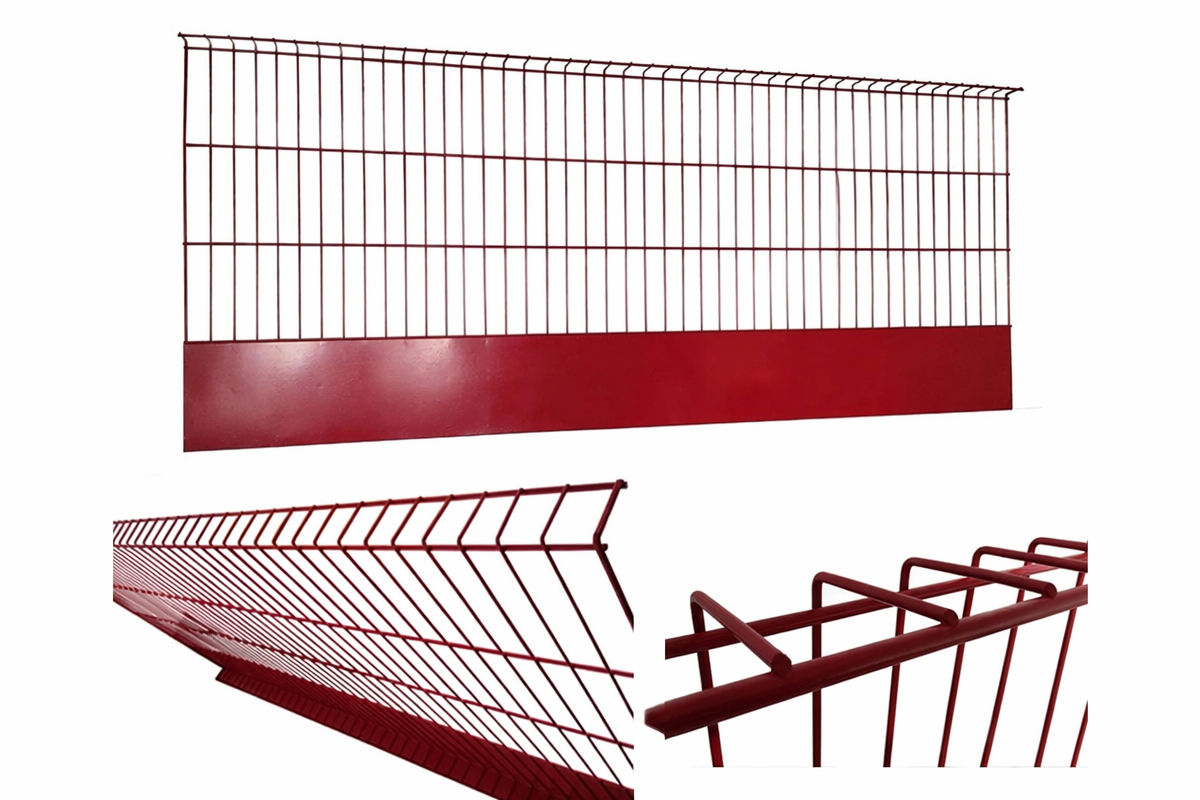
Question 4: "What if I need to order more components in six months?"
A common frustration: a contractor buys an edge protection system for Project A, everything works perfectly, and then six months later they need 20 additional panels for Project B — only to discover the supplier has changed the design, discontinued a component, or increased prices beyond budget.
Before committing to a supplier, confirm:
Product continuity — will the same post, rail, and clamp be available in 12 or 24 months?
Interchangeability — are new-production components backward-compatible with earlier batches?
Minimum order quantity for repeat orders — some manufacturers impose high minimums that make small top-up orders uneconomical
A manufacturer with deep production capability and a stable product catalog — rather than a trader sourcing from whichever factory offers the lowest price — is the safer long-term partner. This is particularly important for contractors who standardize on one edge protection system across all their projects.
Question 5: "How do I train my crew to install this correctly?"
Edge protection only works when installed as designed. A guardrail post that is not fully seated in its base plate, a clamp tightened with a worn-out wrench that cannot reach the specified torque, or a toe board fastened with zip ties instead of mechanical fixings — these are not hypothetical scenarios. They happen on sites every day, and they turn compliant equipment into non-compliant installations.
Ask your supplier for:
Visual installation guides with photographs and diagrams, not just text-heavy manuals that nobody reads on site
A one-page quick-reference card that crews can laminate and keep in the site office or tool container
On-site or video training options for the first deployment on a new project
The best edge protection suppliers view installation training as part of the product. If your supplier ships components in a crate with nothing more than a packing list, you will be doing their job for them — training crews from scratch using trial and error.
Question 6: "What documentation do I get for my safety file?"
Every construction project maintains a safety file — a collection of certificates, method statements, and inspection records that proves to the client, the regulator, and (if things go wrong) the court that appropriate safety measures were in place. Edge protection documentation should include:
Manufacturer's declaration of conformity to the relevant standard (OSHA, EN 13374, CSA Z797, AS/NZS 4994)
Load-test certificates for the specific model and configuration purchased
Material certificates showing steel grade and galvanization coating weight
Installation manual with post spacing tables and torque specifications
Inspection checklist template for daily and weekly barrier checks
If your supplier cannot provide all five documents at the time of delivery, assume you will need to commission independent testing — an avoidable cost that eats into whatever savings the cheaper system promised.

The Guoxing Difference
At Anping Guoxing, we answer these six questions every day — because our clients ask them. We provide full test documentation matched to project configurations, systems designed for multi-phase reconfiguration, guaranteed product continuity across repeat orders, and installation support materials in multiple languages. Our edge protection fencing is manufactured under ISO9001 quality management in Anping, the global hub of wire mesh production, and ships factory-direct to contractors in over 30 countries.
Do not buy edge protection without asking the right questions. If your current supplier cannot answer them, talk to us.
Start the conversation — request your edge protection specification pack today at www.gxfence.com.