
 EN
EN
 AR
AR FR
FR DE
DE IT
IT JA
JA PT
PT RU
RU ES
ES NL
NL RO
RO PL
PL VI
VI GA
GA MS
MS SK
SK SV
SV IW
IW KO
KO TL
TL
3D Fence: The Complete Buyer's Guide to Security and Durability
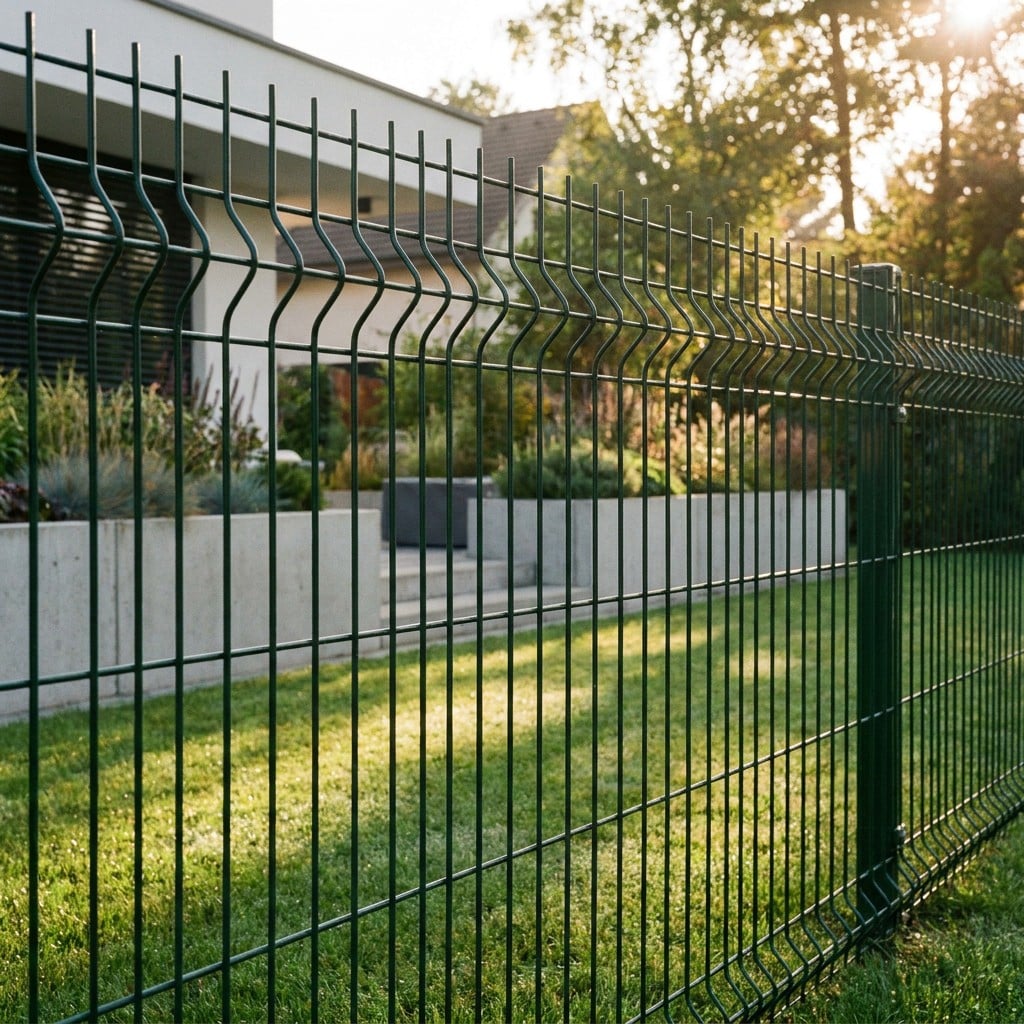
Drive through any modern industrial park, housing estate, or school campus and you will see them: rows of steel mesh panels with a distinctive V-shaped profile that catches the light at an angle. That is a 3D fence — one of the most popular perimeter security solutions in the world. Its name comes from the V-bend pressed into each panel, which gives the flat mesh a third dimension of depth, strength, and visual interest.
But what exactly makes a 3D fence different from ordinary welded mesh fencing? How do you choose the right specifications? And is it worth the premium over cheaper alternatives? This guide answers the questions contractors, property managers, and government buyers ask us most often — with real-world scenarios to help you decide.
What Makes a 3D Fence Different?
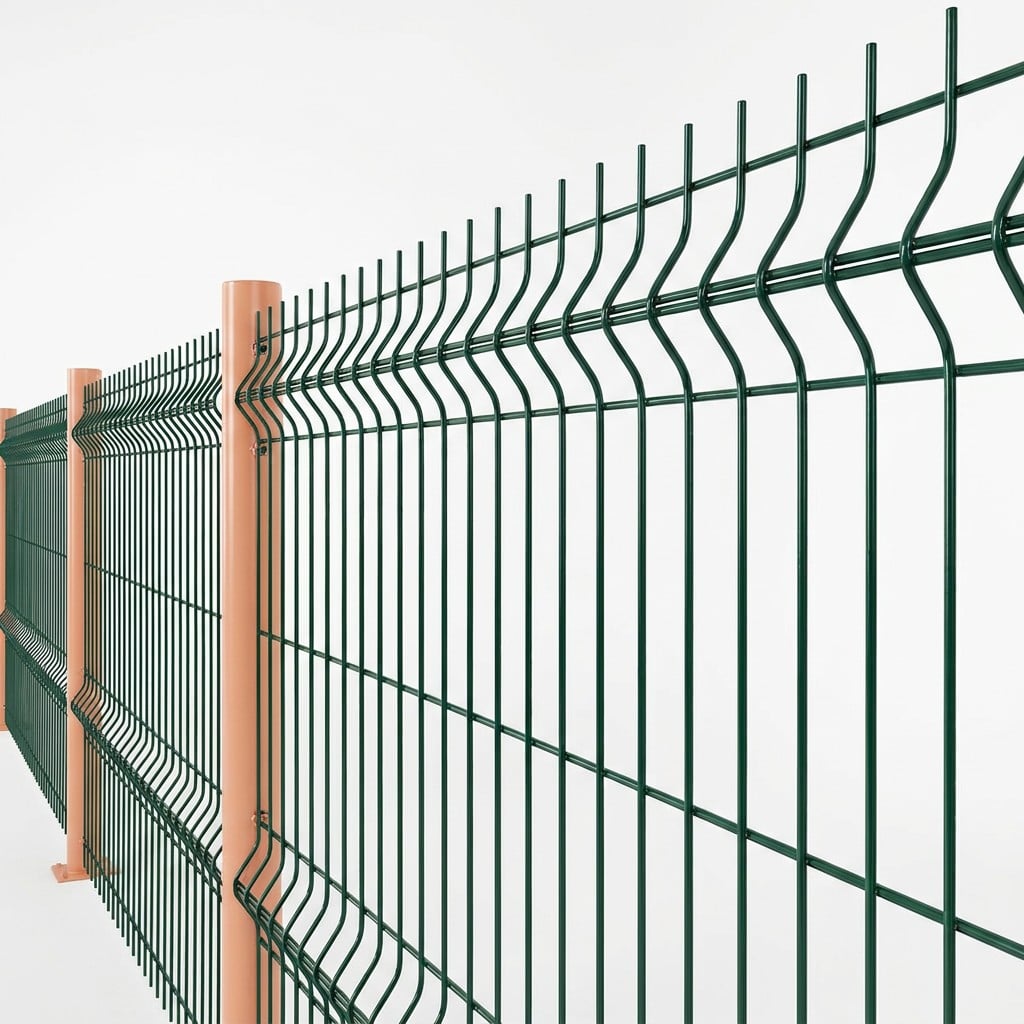
A 3D wire mesh fence starts as a welded mesh panel — horizontal and vertical wires welded at every intersection. The difference is a deep V-shaped bend pressed vertically through the middle of the panel. That simple V-profile does three things at once:
It increases strength. The V-bend acts like a structural rib. A 3D panel resists bending and impact far better than a flat panel of the same wire gauge, because force is distributed along the angled plane instead of concentrating on a single axis.
It deters climbing. The angled surface makes handholds and footholds awkward. Compared to flat mesh, a 3D fence is significantly harder to scale — one of the main reasons security buyers prefer it.
It looks better. The three-dimensional surface breaks up the monotonous flat expanse of a fence line. Aesthetic quality matters for residential communities and commercial campuses where the fence is a visible part of the environment.
Real-World Scenarios: Where 3D Fences Earn Their Keep
Scenario One: The Housing Estate That Wanted Safety Without a Prison Look
A developer in Saudi Arabia was building a 400-villa gated community and needed perimeter protection that would not feel oppressive. Flat anti-climb mesh tested well for security but reminded residents of detention centers. The solution was a 3D fence system in green powder coating, 2.0 meters high, with flat wire for a cleaner appearance.
The estate's management reported zero intrusion attempts in the first two years — while property values held because the perimeter looked welcoming rather than hostile. For residential developers, the 3D fence's combination of anti-climb performance and aesthetic flexibility makes it the default choice.
Scenario Two: The Airport That Needed Visible Deterrence
Perimeter security at an airport is not just about stopping intruders — it is about being seen to stop them. A regional airport in Southeast Asia specified 3.4-meter 3D fences topped with barbed wire for its restricted zones. The airport's security director noted that the visible V-profile and substantial height changed the calculus for would-be intruders: the fence advertised its own difficulty.
For critical infrastructure — airports, power stations, data centers, military facilities — the 3D fence is often the base layer of a multi-layered security system, combined with CCTV, motion sensors, and patrols.

Scenario Three: The School That Needed Child-Safe Boundaries
A school board in Australia needed to keep children inside the campus during recess while allowing clear sight lines for supervision. Solid walls were rejected — they created blind spots and felt forbidding. The 3D fence, with its open mesh, provided transparent visibility while its small mesh openings prevented climbing and prevented small objects from being passed through.
Schools, parks, and playgrounds choose 3D fences precisely because the mesh is open enough for supervision but fine enough to stop climbing and gap-through accidents.
Scenario Four: The Factory That Needed a 30-Year Investment
A manufacturing plant in Mexico was replacing its chain-link perimeter every eight years due to corrosion near a coastal industrial zone. The maintenance director switched to hot-dip galvanized 3D panels with an additional powder-coated finish. Projected service life: 25 to 30 years. Total lifetime cost dropped by roughly 60 percent compared to the chain-link replacement cycle.
For industrial facilities, the 3D fence is not a purchase — it is a long-term investment. The double corrosion protection of galvanizing plus powder coating is what makes that 30-year promise realistic.
Questions We Hear Most Often
Q: How is a 3D fence different from a double wire fence?
Both are welded mesh panels, but they serve different purposes. A 3D fence has a single mesh layer with a V-bend for rigidity and anti-climb performance — ideal for general perimeter security. A double wire fence has two parallel mesh layers welded to the same frame, which makes it dramatically stronger and nearly impossible to climb, but at a higher cost. Our rule of thumb: choose 3D for standard perimeter security, and double wire only where maximum strength is justified, such as correctional facilities or high-value logistics hubs.
Q: What specifications should I choose?
Three parameters matter most:
Wire diameter. Common choices range from 3.0 mm to 6.0 mm. For residential perimeters, 3.5–4.0 mm is standard. For industrial and high-security sites, specify 4.5 mm or thicker. Thicker wire costs more but resists cutting and impact far better.
Mesh opening. Smaller openings (e.g., 50 x 200 mm) are harder to climb and prevent small objects from passing through. Larger openings (e.g., 100 x 200 mm) reduce material cost and wind load. For anti-climb performance, stay at or below 50 x 200 mm.
Height. Standard heights run from 1.0 m to 2.4 m. Above 2.0 m, most suppliers recommend adding angled top sections or barbed wire, because a tall fence alone is not enough against determined intruders.
Q: How long does a 3D fence last?
With proper specification, 20 to 30 years. The deciding factor is corrosion protection: hot-dip galvanizing provides the base protection (typically 60–90 g/m² of zinc), and an additional powder-coating layer adds a second defense plus color. In coastal or industrial-polluted environments, always choose galvanized-plus-powder-coated panels. Ask your supplier for salt spray test results (ASTM B117 / ISO 9227) as proof.
Q: Is installation difficult?
No — and this is one of the 3D fence's biggest selling points. Panels arrive pre-welded and pre-finished. Installation is: dig post holes, set posts in concrete, bolt the panels to the posts, and clip on the caps. A trained two-person crew can typically install 50 to 80 meters per day. For buyers who do not want to manage installation, many suppliers offer knockdown or fully assembled options depending on shipping constraints.
Q: What drives the price?
Four factors: wire diameter, mesh opening, height, and surface finish. Larger wire, smaller mesh, greater height, and dual-layer finishes all increase cost. Post quality is also important — a fence is only as strong as its posts. When comparing quotes, always compare like-for-like specifications; the cheapest quote is often the one with thinner wire or lighter galvanization.
Q: Can the fence be customized?
Yes. Most manufacturers, including Guoxing, offer custom panel dimensions, wire diameters, mesh openings, and any RAL color for the powder coating. Custom specifications add roughly two to four weeks to lead time. For large projects — 5,000 linear meters or more — we strongly recommend requesting samples before committing to a full order.
Why Buyers Choose Guoxing 3D Fence
Anping Guoxing Wire Mesh Products manufactures 3D fence panels in the heart of the world's wire mesh industry — Anping, China. Every panel is produced under ISO9001 quality control, with CE and SGS certification available on request. Our factory-direct pricing means you pay for steel and labor, not for middlemen, and our export experience covers more than 30 countries across the Middle East, Europe, the Americas, and Oceania.
Whether you are fencing a housing estate, an industrial plant, a school, or a critical infrastructure site, our engineers will help you specify the right wire diameter, mesh opening, height, and finish — and provide load-test certificates and corrosion documentation with every shipment.
Need a tailored quotation for your project? Contact the Guoxing team today — we respond to all inquiries within 24 hours.