
 EN
EN
 AR
AR FR
FR DE
DE IT
IT JA
JA PT
PT RU
RU ES
ES NL
NL RO
RO PL
PL VI
VI GA
GA MS
MS SK
SK SV
SV IW
IW KO
KO TL
TL
Edge Protection Fence Real-World Applications and What Every Contractor Should Know
Walk onto any active construction site and you will see them — edge protection fence panels standing guard at the perimeter, silent and unglamorous. Most workers barely notice them. That is exactly the point. When edge protection is doing its job, nothing happens. No falls, no citations, no headlines. But behind that quiet reliability is a web of decisions made long before the first post went up what system to buy, how to match it to the application, and whether to cut corners.
This article takes you into the real-world scenarios where edge protection fencing proves its worth — and the lessons learned on job sites where the wrong choice created expensive problems.
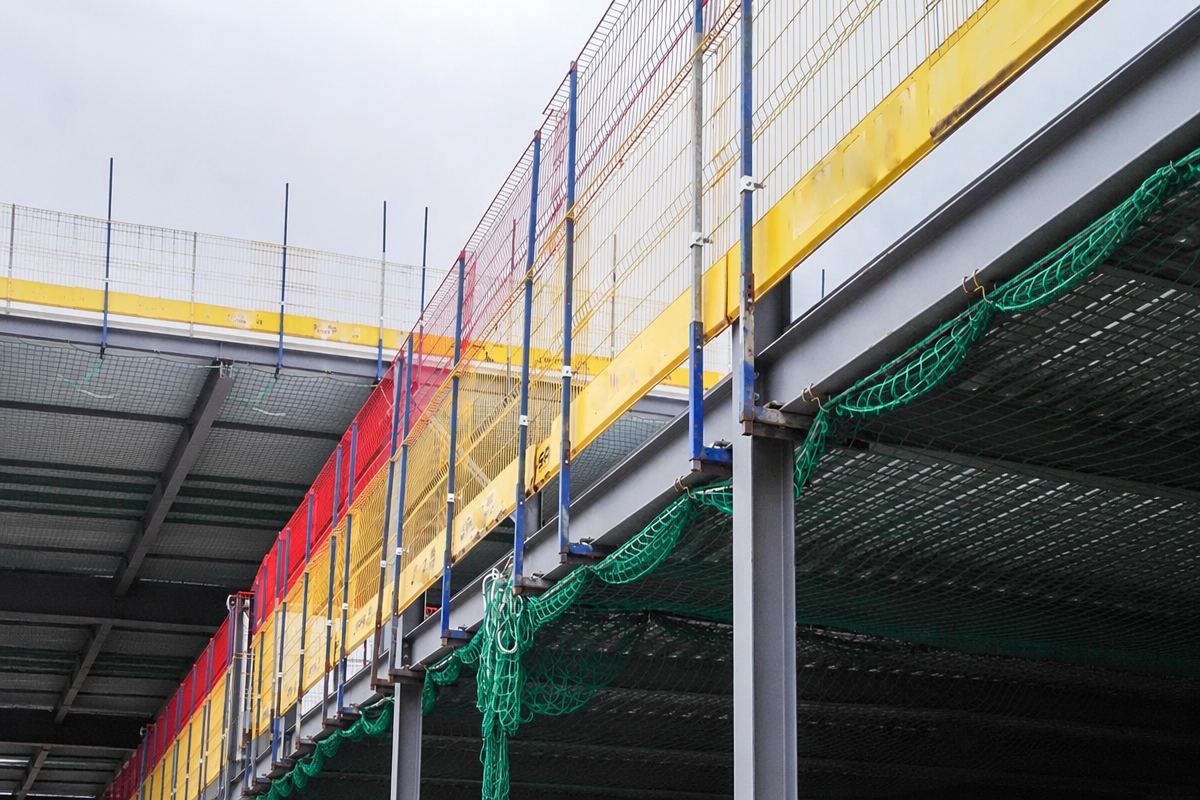
Scenario One The High-Rise Concrete Frame
A contractor in Dubai had just poured the 18th floor slab when the site safety officer flagged a problem. The edge protection fence installed around the open perimeter was deflecting visibly under wind load. The posts were spaced at 3 meters — technically within the manufacturer's maximum, but on a building that tall, wind speeds at height were double what the ground-level crew had accounted for.
The fix was straightforward but embarrassing halve the post spacing to 1.5 meters on the top five floors and add diagonal bracing at corners. The lesson Wind loading at height is not a footnote in the spec sheet — it is often the governing design case. On any structure above 10 stories, assume wind will be your primary load, not impact, and specify post spacing accordingly.
Key takeaway On high-rise projects, always request wind-load test data from your edge protection supplier. A system that passes a static load test at ground level may behave very differently at 60 meters in a 50-kilometer-per-hour crosswind.
Scenario Two The Refurbishment Where Access Was Everything
A heritage building renovation in Manchester presented a different challenge. The client needed edge protection fencing along the entire roof perimeter, but the building had ornate cornices, drainpipes, and uneven parapet walls that made standard base-plate mounting impossible. The contractor considered scaffolding at nearly triple the cost before the manufacturer proposed a clamp-mounted edge protection system that attached directly to the existing steel roof structure, bypassing the fragile masonry entirely.
This saved the project roughly 40 percent on edge protection costs and avoided three weeks of scaffolding erection and dismantling. The clamp system was installed in four days by a two-person crew.
Key takeaway Not every edge protection problem is solved by a standard post-and-panel system. Clamp-mounted, counterweight, and parapet-mounted configurations exist for a reason. When surveying a site, take photographs of all edge conditions — especially irregular ones — and share them with your supplier before ordering.
Scenario Three The Event That Needed Both Safety and Branding
A major music festival in Australia needed edge protection along a temporary elevated stage platform. Standard yellow guardrails would have worked structurally, but the event organizers wanted something that looked intentional and premium, not industrial. The solution was a powder-coated edge protection fence in matte black, with modular panels that accepted branded fabric banners between the rails.
The fence met ASNZS 4994 load requirements while doubling as sponsorship inventory — banners for beverage brands and event partners were clipped directly to the mesh. The edge protection did not just prevent falls; it earned revenue.
Key takeaway Edge protection in public-facing environments is visible. Black, white, and custom-color powder coating options can turn a safety necessity into a branding asset. If your project involves public events, hospitality zones, or retail-adjacent construction, ask about aesthetic finishes upfront.
Scenario Four The Factory That Could Not Stop Production
A food processing plant in Canada needed edge protection around an open mezzanine while a conveyor system was being replaced below. The catch production on the adjacent line could not stop, which meant no drilling, no welding, and no debris falling onto the active processing area.
The contractor used a freestanding counterweight edge protection system — no anchoring required. The base plates were weighted with rubber-coated steel blocks that provided enough stability to meet CSA Z797 requirements without penetrating the factory floor. A debris net was suspended beneath the guardrail to catch any dropped tools. Installation took six hours on a Saturday during a scheduled maintenance window. Production never stopped.
Key takeaway In operational facilities — factories, warehouses, airports, hospitals — edge protection must be non-invasive. Freestanding and clamp-mounted systems eliminate the need for floor anchors and allow the barrier to be repositioned as work zones shift.
Questions We Hear Most from Site Managers
Q Can I reuse edge protection fencing across multiple projects
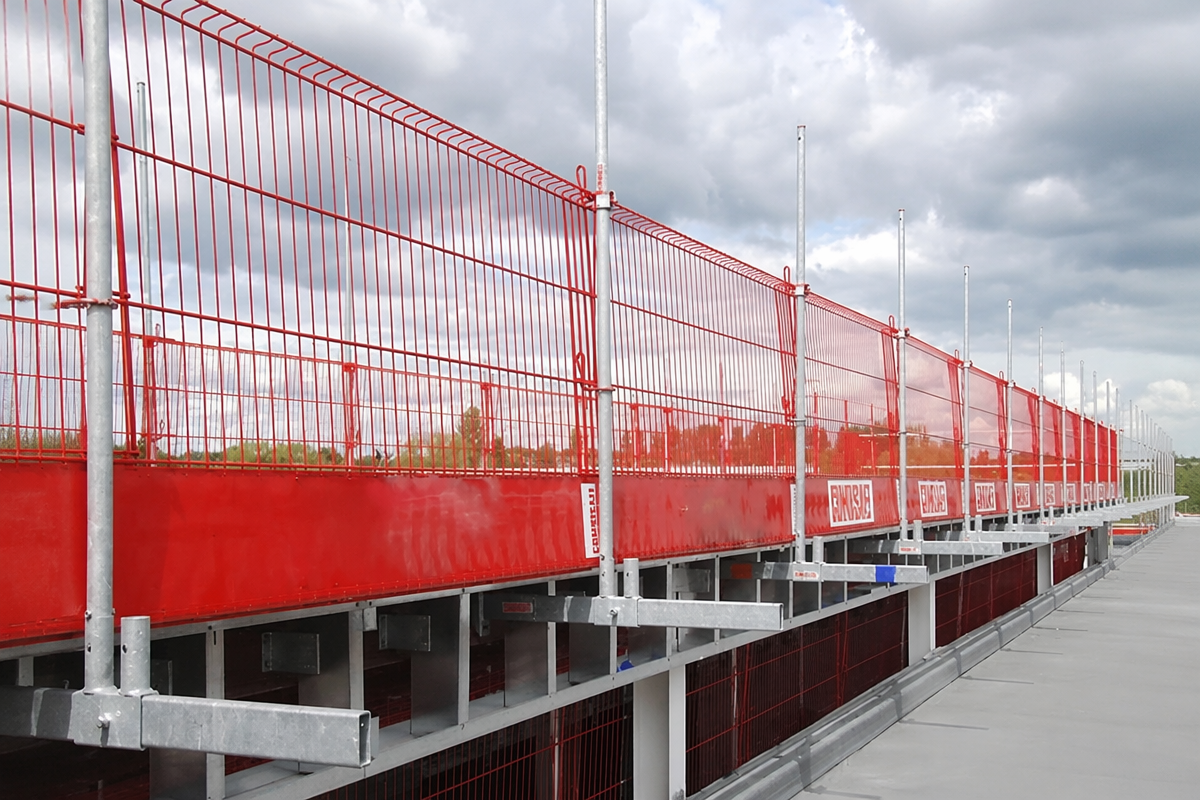
Yes — and you should. A well-maintained galvanized steel edge protection system has a service life of 10 to 15 years under normal conditions. The key is storage keep components off the ground on pallets, protect threaded connections from mud and concrete splatter, and inspect welds and clamps between deployments. One contractor we supply has been using the same set of edge protection panels across 40 projects spanning eight years. Their only replacements have been a handful of toe boards lost during dismantling.
Q How soon can you deliver a custom-sized system
Custom dimensions add two to four weeks to the standard lead time, depending on the complexity of the modification and the current production queue. Standard dimensions — post heights of 1,000 mm or 1,100 mm, panel lengths of 2,500 mm — are typically available from stock and ship within 7 to 10 working days.
Q Do I need engineering sign-off on the edge protection design
This depends on local regulations. In many jurisdictions, the edge protection system itself must be engineer-certified, but the installation layout does not require separate sign-off as long as it follows the manufacturer's installation manual exactly. However, for high-rise projects, bridge work, or any application where post spacing deviates from the standard, a site-specific engineering review is advisable. Reputable manufacturers provide layout guidance and, when needed, project-specific load calculations.
Why Guoxing Fits These Scenarios
Anping Guoxing manufactures edge protection fencing that has been deployed in all of the scenarios described above — from high-rise concrete frames in the Middle East to food processing mezzanines in North America. Our systems are built on hot-dip galvanized steel with optional powder coating, engineered to meet OSHA, EN 13374, CSA Z797, and ASNZS 4994 standards, and available with a full range of mounting options including base-plate, clamp, counterweight, and parapet configurations.
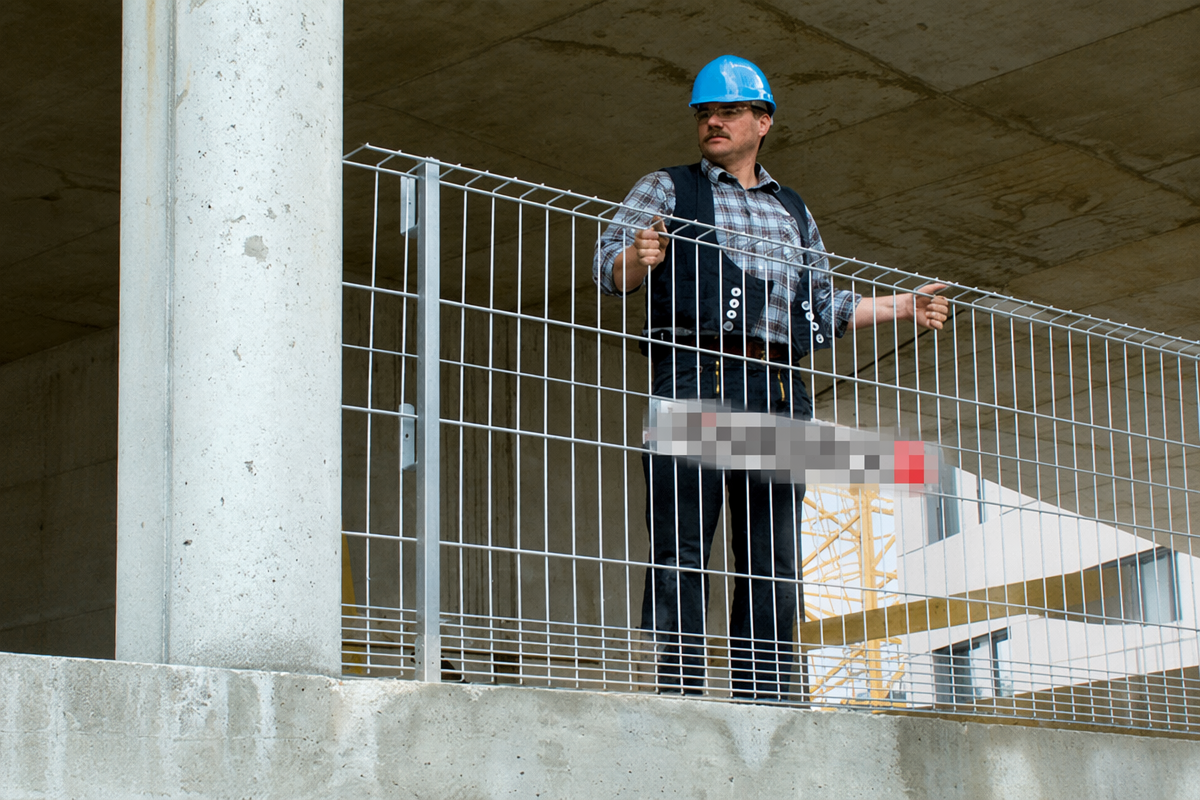
Every order includes complete installation manuals, load-test certificates, and material traceability documentation. Whether your project is a single building or a national rollout across 20 sites, our factory-direct pricing and custom engineering capability mean you get exactly the system your application demands — without paying for features you do not need.
Plan your next project with confidence. Contact Guoxing today for a project-specific edge protection proposal.