
 EN
 AR
 FR
 DE
 IT
 JA
 PT
 RU
 ES
 NL
 RO
 PL
 VI
 GA
 MS
 SK
 SV
 IW
 KO
 TL

Edge Protection for Roofs, Formwork and Pontoons: Matching the Barrier to the Edge
There is no such thing as a general-purpose edge. A roof perimeter, a suspended slab, a formwork deck and a floating pontoon present four different problems, and the barrier that solves one is frequently the wrong answer for the next. Buying edge protection by product name rather than by edge type is how projects end up with a barrier that is compliant on paper and awkward in practice.
This guide works through the three edge types we are asked about most often, and sets out what actually changes between them: the height, the fixing, and the mesh.
What Actually Changes Between One Edge and the Next?
Three variables, and they interact.
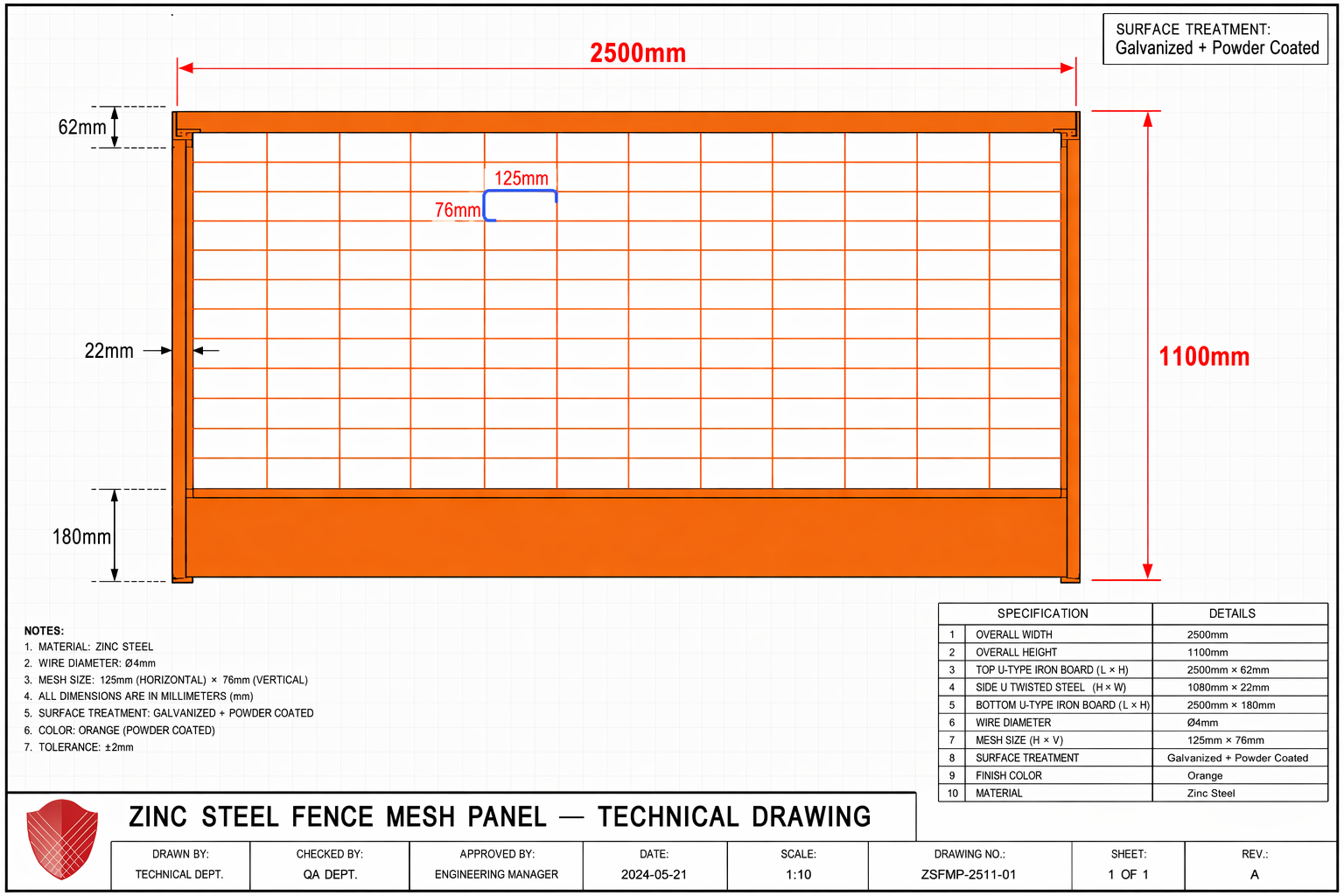
Roof perimeters: pitch and the 900 mm line. Australian guidance requires a guardrail at least 900 mm above the roof surface, measured vertically. On a pitched roof that measurement is taken from a defined point rather than from the eave, which is why roof protection is specified with more care than slab protection. Our 1100 mm and 1300 mm panels are made to sit above that line rather than on it, and the taller panel is the usual choice where the roof pitch or the surface under the barrier makes the effective height harder to hold.
Slab and formwork edges: the fixing is the constraint, not the panel. A slab edge gives you a clean vertical face and, usually, somewhere to fix. A formwork deck gives you a surface that is about to be struck. Those two conditions produce different post connections even where the panel is identical, which is why the fixing detail has to come from the site rather than from a catalogue. A panel system is only as good as the connection it is standing on.
Pontoons and floating platforms: the platform moves with the load. A floating platform behaves differently from a building. It deflects, it lists as loads move across it, and it is often accessed from the water side. Edge protection on a pontoon has to be light enough not to change the platform's trim, fixed in a way that tolerates movement, and arranged so that the barrier does not become a snag point for mooring lines. This is a genuinely specialist application, and it is one where a standard building barrier, correctly adapted, usually beats a fabricated one.
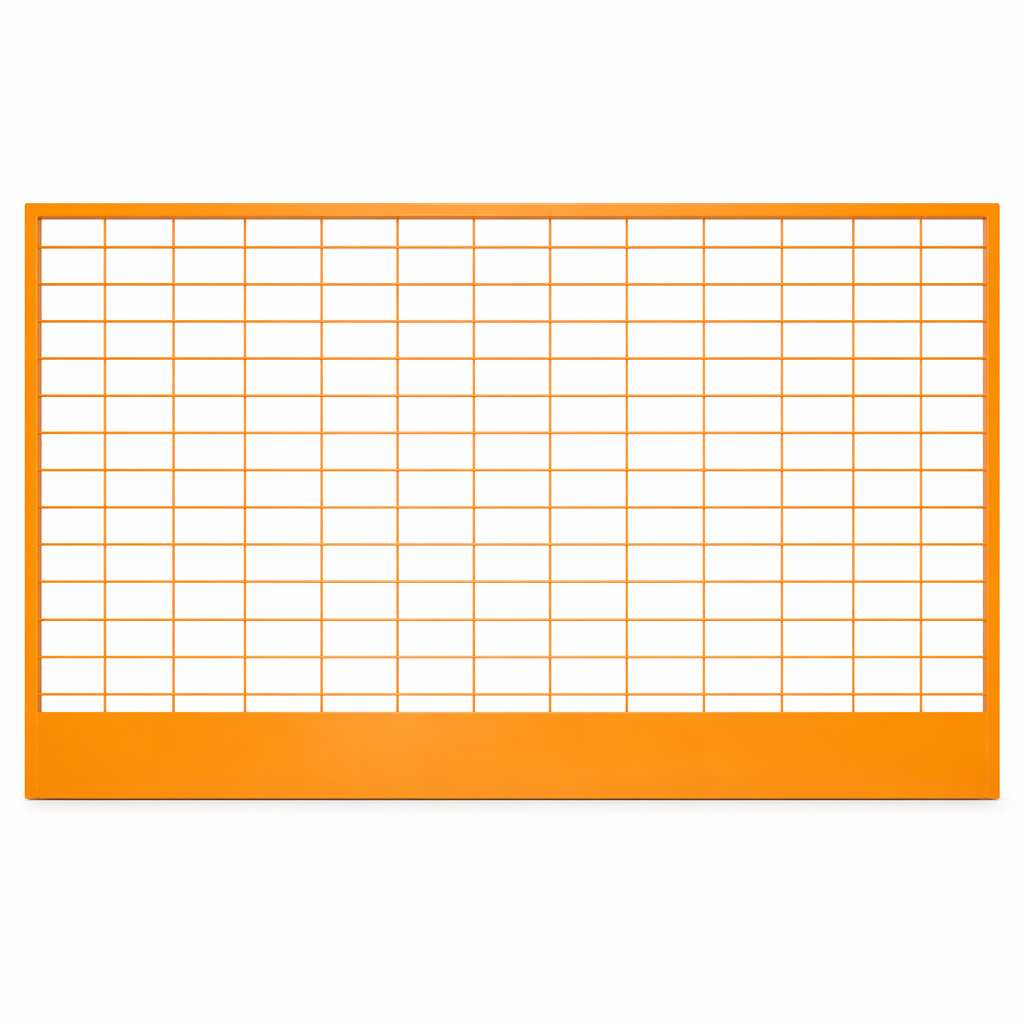
Across all three, the mesh decision is the same question: what has to be stopped from going over the edge? 50 x 50 mm and 75 x 75 mm retain tools and debris; 50 x 150 mm and 50 x 200 mm suit applications where the barrier's job is fall prevention and the face can stay more open.
Real-World Scenarios: Where the Edge Type Decides the Specification
Scenario One: The Roof Replacement on an Occupied Building
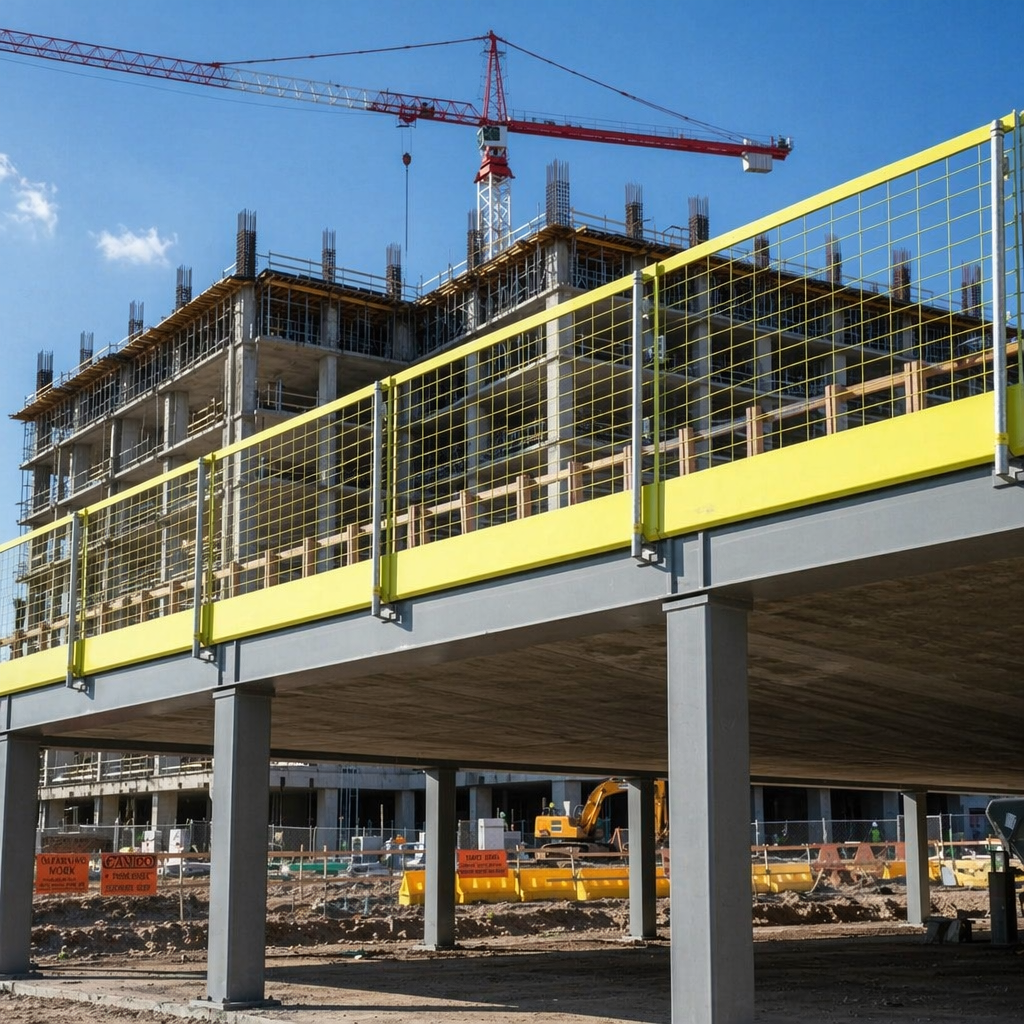
Replacing a roof over a building that is still in use means the barrier has to protect the roof crew and, at the same time, keep material off the occupants and off any public interface at ground level. The height requirement is set by the standard; the containment requirement is set by what is below. On this kind of job the decision usually lands on a 1300 mm panel with a tight mesh, fixed so that it can be moved in sections as the roof is opened up — because the protected edge follows the work, it does not stay where it started.
Scenario Two: The Suspended Slab Pour Cycle
A slab edge is protected, poured past, struck and protected again two levels up. The barrier has to survive that cycle dozens of times without the post connection degrading the concrete it is fixed to. The practical specification here is a panel light enough for two people to move, a post section stiff enough to hold the panel in wind, and a fixing method the formwork crew already understands — because a fixing detail that requires a specialist trade will not be reinstated properly at 6 am on the next cycle.
Scenario Three: The Pontoon and Jetty Project
Floating platforms present the case where generic edge protection fails. The barrier has to be fixed to a deck that moves, in a marine environment that will attack any coating that is not properly applied, and light enough that its own weight does not become part of the platform's load calculation. Hot-dip galvanising is close to mandatory here, and the post spacing has to be worked out against the deck structure rather than against a standard panel module.
Scenario Four: The Basement Void and Lift Shaft
Voids and shafts are the edge type most often protected with whatever is left on site, and they are the one where a proper barrier matters most — the drop is vertical, the edge is short, and the barrier is frequently the only thing between a worker and a fall of several storeys. Short runs and tight returns favour a panel system over fabricated protection, because the panel can be cut to the opening rather than the opening being built around a frame.
Questions We Hear Most Often
Q: What height does roof edge protection need to be? Australian guidance puts the minimum at 900 mm above the roof surface, measured vertically, with the measurement point defined for pitched roofs. Our panels are supplied at 1100 mm and 1300 mm so the installed barrier sits above that line with margin, which is the practical answer where the roof surface is not uniform.
Q: What mesh opening stops dropped objects? 50 x 50 mm and 75 x 75 mm are the effective sizes for tools, fixings and offcuts. 50 x 150 mm and 50 x 200 mm are available where the barrier is a fall-prevention measure and debris is controlled by other means. Specify the largest opening that still retains what your site drops — tighter mesh costs more in weight and wind load.
Q: How do I protect a pontoon or floating platform? Treat it as a marine structure rather than a building. Specify hot-dip galvanised finish, keep the panel weight down so it does not affect trim, fix to the deck structure rather than to the deck surface, and plan the barrier around mooring and access points. Our pontoon mesh edge protection system is built for this application specifically.
Q: What post sizes and finishes are available? Posts come in 1100 mm and 1300 mm heights, in 48 mm round or 40 x 40 mm square section, with 1.5 mm or 2.0 mm wall. Finish options are powder coated, hot-dip galvanised or standard galvanised. Hot-dip galvanising is the default for coastal, marine and long-duration work.
Q: Can the system be reused on the next stage? Yes — that is the main reason to buy panels rather than fabricate. The frame and post condition decide reuse life, and mesh condition usually decides when a panel is retired. Panels that are stacked and handled as panels outlast the project they were bought for; panels dragged across a slab do not.
Q: What should come with the order? A written specification matching what was ordered, panel and post dimensions, mesh opening and wire diameter, coating details, and the quality documentation that applies to the coating and the manufacturing. Anping Guoxing manufactures under ISO 9001 quality control with CE and SGS certification available on request, and we supply the documentation your project file needs.
Why Buyers Choose Guoxing Edge Protection Barriers
Anping Guoxing Wire Mesh Products manufactures edge protection barriers in the heart of the world's wire mesh industry — Anping, China. The range spans 1100 x 1300 mm to 1300 x 2200 mm panels, 4.0 mm to 8.0 mm wire, mesh openings from 50 x 50 mm to 50 x 200 mm, and 1100 mm or 1300 mm posts in 48 mm round or 40 x 40 mm square section — including the pontoon mesh edge protection system for floating platforms. Every panel is produced under ISO 9001 quality control, with CE and SGS certification available on request, and our export experience covers more than 30 countries.
Send us the edge type, the structure you are fixing to and what has to be kept from falling, and we will quote the panel, post and finish that fits that specific edge — not a generic kit.
Need a tailored quotation for your project? Contact the Guoxing team today — we respond to all inquiries within 24 hours.